
HIV’s exploitation of the immune system
November 24, 2026
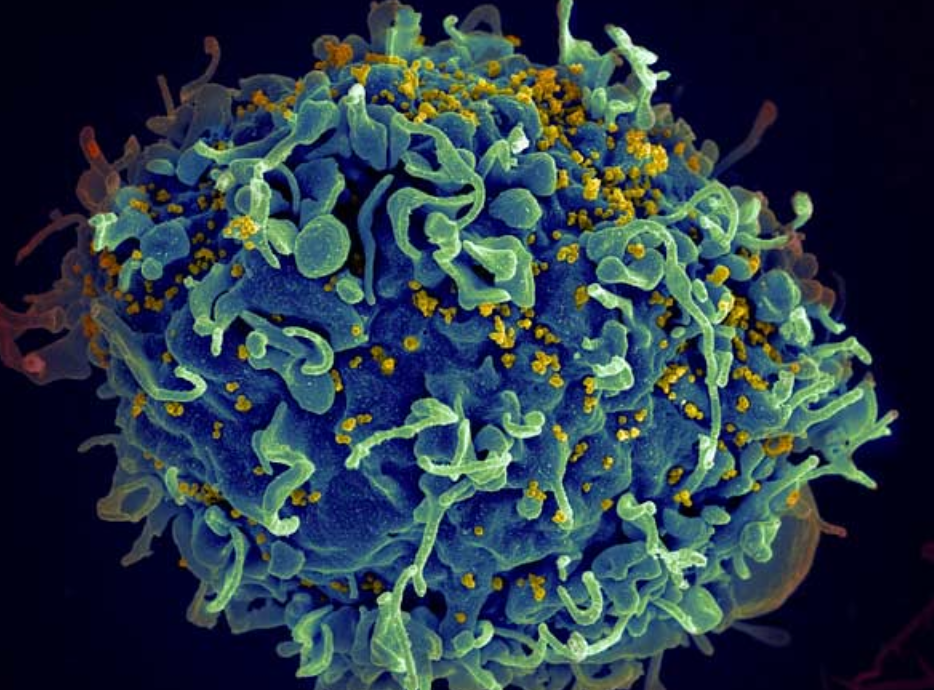
The body’s immune response is a necessary component of living a healthy life, but what happens if its capabilities are diminished? This occurs when an individual is infected with human immunodeficiency virus (HIV), an illness that attacks the body’s immune system and leaves it much more vulnerable to disease. The virus is spread between individuals via contact with bodily fluids, and is most commonly transmitted through unprotected sexual intercourse or through sharing needles among multiple individuals.
“Eventually, HIV mutates at such a rapid rate and with such immense frequency, that the immune system simply cannot keep up.”
HIV is especially unique when compared to other viruses, as it can often present without symptoms. This is particularly dangerous because if HIV is left untreated, it can eventually evolve into acquired immunodeficiency syndrome (AIDS), which is characterized by a heavily damaged immune system that cannot defend against illnesses. Without treatment, AIDS is fatal. Moreover, there is no cure for HIV, so if an individual contracts it, they are infected permanently. Experts frequently underscore the public safety concerns surrounding HIV, citing that over 35 million people were infected with the virus as of 2012, and, at its peak, over 1 million HIV-related deaths occurred a year. They highlight that somewhat effective treatment does exist in the form of antiretroviral therapy (ART), but it has to be taken throughout the duration of a person’s life. As such, researchers and officials emphasize that HIV remains a major health concern that must be addressed.
Based on this, it is easy to ask: how exactly does HIV elude and impair the immune system? The answer lies within the mechanisms of the immune system, and how HIV exploits its pathways. Typically, as the immune system, composed of white blood cells (WBCs), fights off foreign diseases, it develops immunological memory of different pathogens. It uses this memory system to detect patterns in future viruses and develop a specialized plan for eliminating the disease. However, HIV, unlike other pathogens, recognizes this ability and takes advantage of it. The virus consistently mutates, and because immunological memory is triggered in different ways by these changing mutations, the immune system is constantly stimulating different molecules called effectors to initiate unique prevention strategies.
Eventually, HIV mutates at such a rapid rate and with such immense frequency, that the immune system simply cannot keep up. The body’s defenses are so overwhelmed by these outputs that they become permanently and severely weakened. Once this occurs, HIV can easily replicate and spread throughout the body. Moreover, HIV forms reservoirs , or large areas of HIV-infected WBCs, within the body. These regions allow HIV to continue persisting, as they can easily infect other WBCs and are resistant to medication.
Although HIV hijacks the immune system in a seemingly irreversible manner, recent advancements have proposed possible methods to undo this damage. One area of interest is T. follicular helper (Tfh) cells, which typically assist WBCs, but are inhibited by HIV. However, researchers believe that they could induce overexpression of these cells, returning them, and the immune system, to their proper functioning. Another possible cure could come from apolipoprotein B editing complex (APOBEC), which has been shown to counter HIV, but is only active within inactive WBCs. Experts cite that the complex could be stimulated in active WBCs, and could assist the body in eliminating HIV. Ultimately, no matter the method, enhanced exploration of these avenues could defeat HIV for good.